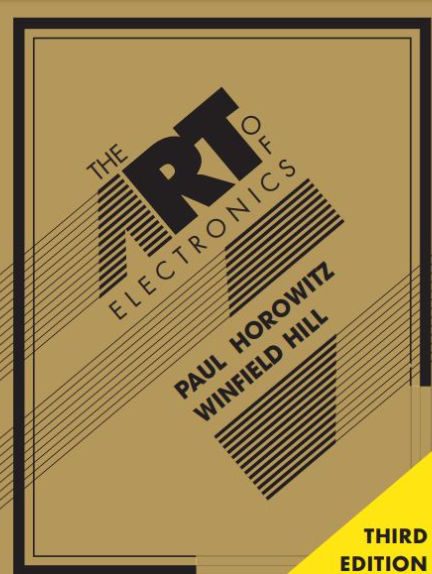
The Art of Electronics
Tahun : 2015Pengarang : Paul Horowitz &Winfield Hil
Penerbit : Cambridge University press
Ket : The field of electronics is one of the great success stories of the 20th century. From the crude spark-gap transmitters and “cat’s-whisker” detectors at its beginning, the first halfcentury brought an era of vacuum-tube electronics that developed considerable sophistication and found ready application in areas such as communications, navigation, instrumentation, control, and computation. The latter halfcentury brought “solid-state” electronics – first as discrete transistors, then as magnificent arrays of them within “integrated circuits” (ICs) – in a flood of stunning advances that shows no sign of abating. Compact and inexpensive consumer products now routinely contain many millions of transistors in VLSI (very large-scale integration) chips, combined with elegant optoelectronics (displays, lasers, and so on); they can process sounds, images, and data, and (for example) permit wireless networking and shirt-pocket access to the pooled capabilities of the Internet. Perhaps as noteworthy is the pleasant trend toward increased performance per dollar.1 The cost of an electronic microcircuit routinely decreases to a fraction of its initial cost as the manufacturing process is perfected (see Figure 10.87 for an example). In fact, it is often the case that the panel controls and cabinet hardware of an instrument cost more than the electronics inside.
Ketegori : ELECTRONIC